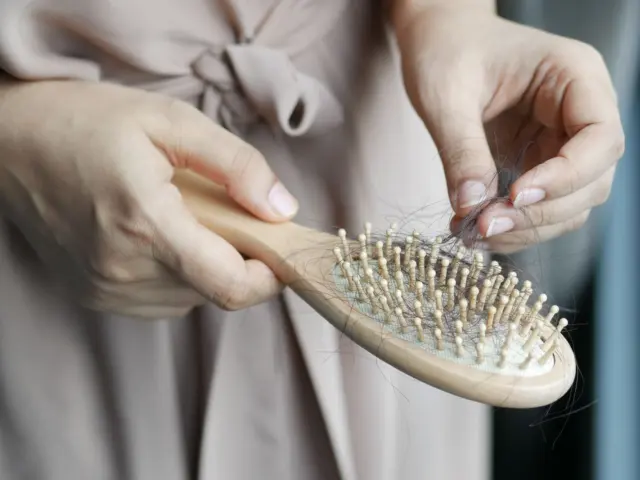

If you’re wondering how to grow hair faster, here’s the honest answer: you can’t speed up your follicles much, but you can protect the length you grow. Scalp health, gentle handling and patience do the real work.
This guide is part of a wider set of hair care tips on the site.
| Item | Value |
|---|---|
| Typical scalp hair growth | About half an inch (1.25 cm) per month |
| Typical growth per year | Roughly six inches |
| Anagen (growth) phase | Two to seven years, depending on your genes |
| Fastest growth years | Between the ages of 15 and 30 |
| Normal daily shedding | 50 to 100 hairs a day |
| Delay before stress shedding shows | Two to four months after a major stressor |
Sources: Acıbadem International’s hair growth guide and PureWow’s expert Q&A. These figures can change, so check the source before you rely on them.
How fast does hair really grow?
Most scalp hair grows about half an inch a month, or roughly six inches a year, and that rate is set mainly by genetics, according to Acıbadem International. The same guide puts it at around 0.35 millimeters a day per hair, across the approximately 100,000 follicles on a typical scalp.
That means the big promises you see online are not realistic. The guide states that growing two inches in a month is biologically impossible, and even one inch exceeds the documented normal range for scalp follicles.

So why do some people report dramatic gains? The same guide lists a few common explanations that have nothing to do with a faster follicle:
- Curl shrinkage: stretching curly hair can reveal length that was always there, because shrinkage routinely masks 30 to 75 percent of true length.
- Less breakage: hair that was snapping off at the same rate it grew is finally retaining length.
- Recovery from shedding: regrowing hairs catch up to the rest, adding fullness that reads as faster growth.
The growth cycle that sets your limit
Every hair runs its own cycle, and the length it can reach depends on how long it stays in the anagen (growth) phase. Acıbadem International says this phase lasts two to seven years depending on your genes. A dermatologist quoted by PureWow gives an average of 3 to 5 years.
The cycle has distinct stages, as explained in the PureWow Q&A:
- Anagen: the active growth phase, when hair grows around half an inch per month.
- Catagen: a short, transitional phase that lasts approximately 10 days.
- Telogen: the resting phase, after which strands are released and the follicle remains inactive for 3 months before the cycle repeats.
Age matters too. The same dermatologist says hair grows the fastest between the ages of 15 and 30, and growth tends to slow gradually after that as hormones change (PureWow).
What can slow your hair growth down
Beyond age and genes, PureWow’s experts point to several things that can make hair grow more slowly:
- Health conditions
- Vitamin or nutrient deficiencies caused by a poor diet
- Stress
- Hormonal imbalances
- Certain medications
- Excessive heat damage from everyday styling
Shedding is a separate issue. Losing 50 to 100 hairs a day is normal, and major stressors can trigger heavy but temporary shedding two to four months later, per Acıbadem International.
If hot tools are part of your routine, read up on how to protect hair from heat damage before you chase length. And if you notice slower growth, the PureWow article suggests trying a more balanced diet or ways to reduce stress, then consulting a doctor if you see no improvement in a couple of months.
Keeping the length you grow
Because you can’t change your genetic rate much, the practical goal is retention. Acıbadem International notes that trimming doesn’t speed growth, but removing split ends before they travel up the strand helps you retain the length you grow.
Scalp care is the other lever. One expert quoted by PureWow advises avoiding products with harsh ingredients (like sulfates) that can strip natural oils, and choosing a non-drying shampoo instead. The idea is to keep a healthy environment so each hair can extend the amount of time it spends in the growth stage.
The same expert is a fan of scalp massage, saying it helps circulate blood and nutrients to the hair follicles (PureWow). The article offers this as an expert opinion rather than as proof of faster growth. If breakage is already visible, it is worth learning how to repair damaged hair so the ends stop undoing your progress.
Supplements, oils and treatments: what the evidence says
Biotin is a popular choice, but Acıbadem International states that biotin supplements only improve hair in people who are deficient, which is rare. It adds that high doses can distort thyroid and cardiac blood tests, so talk to a doctor before taking them.
On treatments, PureWow’s August 2021 article quoted a dermatologist saying minoxidil was the only over-the-counter treatment scientifically proven to work. That is a dated statement, so check with a doctor or pharmacist for up-to-date advice.
Natural oils have much weaker backing. The same article reports the following, with the dermatologist stressing that bigger, better studies are needed:
- Rosemary oil: a 2015 study compared it to minoxidil, and at 6 months both groups saw significant increases in hair growth.
- Pumpkin seed oil: oral use may help decrease hair loss in androgenetic alopecia, but more data is needed.
- Castor oil: as of that August 2021 article, there were no studies showing it directly causes hair growth.
Frequently asked questions
Can hair grow two inches in a month?
Show answer
No. According to Acıbadem International, even one inch exceeds the documented normal range for scalp follicles. Apparent big jumps usually come from curl stretching, less breakage or recovery from shedding.
Does trimming make hair grow faster?
Show answer
No. A haircut doesn’t change how fast hair leaves the scalp. Its value is in clearing damaged ends so they don’t split further, which Acıbadem International links to holding on to more of the length you already have.
Do biotin supplements help hair grow?
Show answer
Only in people who are deficient, which is rare, according to Acıbadem International. High doses can also distort some blood tests.
How long should I wait before worrying about slow growth?
Show answer
The PureWow article suggests making lifestyle changes first, then consulting a doctor if you see no improvement in a couple of months. A doctor can offer further testing or recommendations.