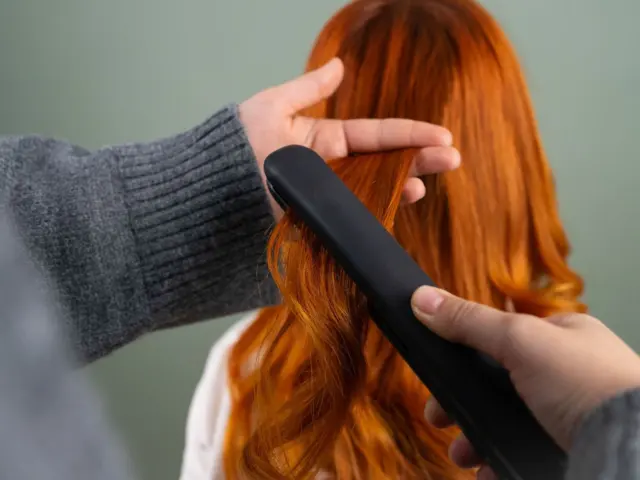
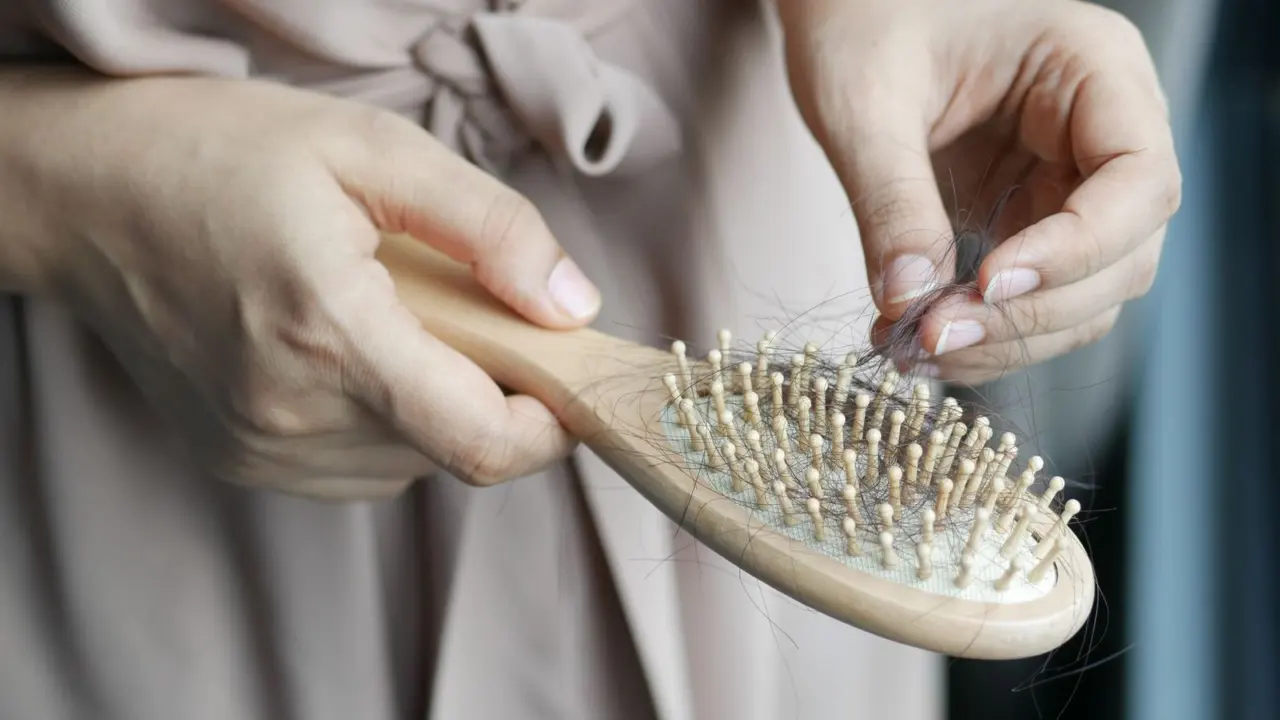
Are your ends snapping off? You can usually slow it. The core of how to stop hair breakage: handle wet hair gently, cut back on heat, and space out chemical services.
This guide is part of the site’s hair care tips, which cover everyday routines beyond breakage.
| Item | Value |
|---|---|
| Gap between chemical services | 8 to 10 weeks, if possible |
| Break from heat-styling tools | At least once a week |
| Dye lightening limit | No more than three shades from your natural color |
| Strength gain from protein-containing conditioners | As much as 10 percent |
| Delay before shedding shows after an internal trigger | About three months |
These figures come from Healthline’s hair breakage guide, updated May 13, 2026, and a ScienceDaily report on a November 2007 American Academy of Dermatology talk. Guidance can change, so check the source before you rely on the figures.
What is hair breakage, and how is it different from shedding?
Hair breakage happens when a strand snaps or splits because of damage, according to L’Oréal Paris’s hair breakage guide. Shedding is different: the hair falls out from the root, and people typically shed between 50 and 100 hairs per day, per the American Academy of Dermatology (AAD). More than that is usually considered excessive and should be evaluated by a dermatologist.
The same guide separates three problems that are easy to mix up:
- Breakage: strands snap off because of physical stress, damage or split ends.
- Shedding: a normal process in which strands fall out from the root.
- Thinning: a reduction in overall hair density, which can come from increased shedding, slowed growth or damaged follicles.
Common signs of breakage include split or thinning ends, excess frizz and a rough or uneven texture. Shorter pieces around the hairline or face-framing sections are another clue, because those areas often experience the most mechanical stress from brushing and styling, as L’Oréal Paris explains.
Healthline notes that healthy hair depends on an inner cuticle with overlapping scales that keep the strands together. When those scales fall apart, hair dries out and can eventually separate.
Prevention matters because damage does not heal. At an AAD event in November 2007, dermatologist Zoe D. Draelos said hair is nonliving and cannot be repaired once it is injured, so the aim is to stop the cycle of over-processing and over-grooming, as ScienceDaily reported.
The most common causes of breakage
In most cases, brittleness comes from rough handling or an improper routine rather than one dramatic event, according to L’Oréal Paris. These are the usual suspects:
- Heat styling: blow dryers, flat irons and curling irons can dry strands out, especially without a heat protectant.
- Over-processing: perms, relaxers, professional straightening and coloring can break the cuticle down when repeated too often.
- Bleaching: bleach lifts the hair’s outer cuticle, which can leave strands more vulnerable to snapping.
- Dryness: dry weather, low humidity and too much heat can all leave hair parched.
- Rough towel drying: rubbing wet hair with a towel damages it when it is most vulnerable.
- Tight hair ties: they pull on the scalp and the hair cuticle.
- Incorrect brushing and combing: too much brushing, or brushing in the wrong way, adds friction.
- Skipped trims: split ends can travel up the length of the hair.
Wet hair is more susceptible to breaking than dry hair, and unusually dry hair may be a precursor to damage, according to Healthline. That is why the wash-and-dry stage of your routine deserves the most care.
Daily habits that cut breakage
Small changes in how you wash, dry and detangle add up. Work through them in order:
- Wash with warm water, not hot. Hot water can lead to further drying, and if your ends are dry, you can concentrate shampoo on your scalp only.
- Never skip conditioner. Try a hair mask on the middle and ends, or spritz on a leave-in conditioner before combing wet hair.
- Blot, don’t rub. Press an absorbent towel around your hair or wrap it, instead of rubbing water out.
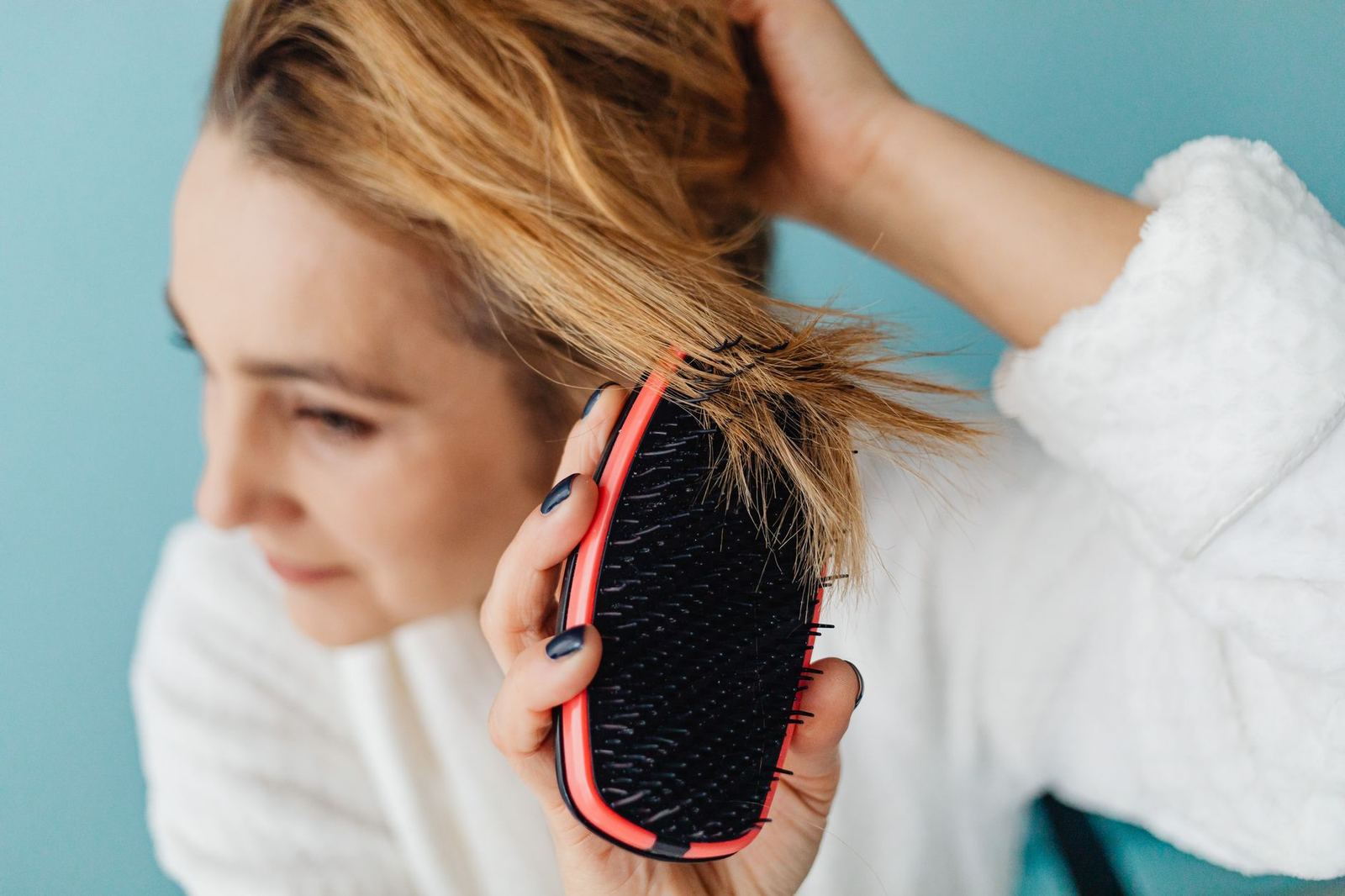
- Detangle with a wide-tooth comb. Use a brush only on dry hair, and choose natural bristles over plastic ones.
- Loosen your updos. Wear your hair down once in a while, and use real hair ties rather than rubber bands.
- Trim split ends. Even when you are growing your hair out, removing damaged ends can prevent further breakage.
Each step above comes from Healthline’s guide, which also suggests shampooing gently at the scalp and applying conditioner smoothly from ends to roots.
Your shampoo choice matters here too, and a separate guide on how to choose shampoo for your hair type walks through the options. A companion article explains how to deep condition hair if your strands feel brittle between washes.
How often you wash depends on how much oil your scalp makes. According to Healthline, daily washes are fine for oily hair but not multiple times per day, while extremely dry hair may only need weekly shampooing. Dr. Draelos added that you should wash your scalp and not only your hair, and that washing every day is not necessary, particularly as you get older, per ScienceDaily.
Finally, drop the old brushing rule. You may have heard that brushing your hair 100 strokes a day is good for it, but the AAD says that is simply a myth, as Healthline reports. Brush and comb only when you are styling.
Heat, color and bleach: limiting chemical and styling damage
Heat tools need high temperatures to give results, which is exactly what stresses the cuticle. Healthline suggests giving your strands a break from all styling tools at least once a week and using a heat-protecting spray before you apply heat.
L’Oréal Paris adds that you should prep with heat protectant, set hot tools to the lowest setting that achieves your look, and air-dry or try heatless styles when you can. You can read the full list on its hair breakage page.
Chemical services call for a similar rule of restraint. Perms, relaxers, professional straightening and coloring can seem to make hair healthier after the first session or two, but doing them too often breaks the cuticle down. The AAD recommends extending the time between sessions to 8 to 10 weeks, if possible, as of Healthline’s May 2026 update, and a hair mask can help extend your results in the meantime. You can check the wording at Healthline.
If you are changing your color, the shade you pick matters. In the 2007 talk reported by ScienceDaily, Dr. Draelos said dyeing is damaging whatever the color or type, but lightening more than three shades requires higher volumes of peroxide and causes more damage. Staying within three shades of your natural color is gentler, and dyeing darker is typically better than dyeing lighter.
The same talk offered tips for hair in your 50s and beyond:
- Shorten the time you leave on dyes or permanent wave solutions, because thinner shafts process faster.
- Use a good conditioner, since some protein-containing ones can increase hair strength by as much as 10 percent.
- Handle your hair as little as possible, including avoiding over-brushing.
When breakage points to something else
Sometimes the cause sits inside the body rather than in your routine. Healthline lists diet, stress and hypothyroidism among the possible causes, and says it is best to consult a healthcare professional if breakage continues despite your efforts.
- Diet: biotin, folic acid, iron, magnesium, vitamins A, C, D and E, and zinc are named as important for hair health, and a balanced diet rich in them may help.
- Protein: Dr. Draelos cautioned that multivitamins will not make up for a lack of dietary protein because they do not contain protein.
- Stress: it can push follicles into dormancy with telogen effluvium, so hair in the middle of a growth cycle may break off.
- Hypothyroidism: an underactive thyroid does not produce enough thyroid hormones, and the thyroid plays a role in hair growth.
Life events can play a part as well. Hair typically does not shed for about three months after something happens inside the body, so a trigger such as stopping birth control pills may be hard to connect, according to ScienceDaily. After pregnancy, hair sheds in the six months following delivery, and Dr. Draelos advised women with an inherited tendency toward female-pattern hair loss to seek dermatologic help.
If your routine is gentle and your hair still keeps breaking, a doctor or dermatologist is the right next stop, not another product.
Frequently asked questions
Can broken hair be repaired?
Show answer
Not permanently. Dr. Draelos said hair is nonliving and cannot be repaired once injured, per ScienceDaily. Silicone conditioning technology was described in that 2007 talk as temporarily mending split ends and decreasing combing friction, so a trim is still the lasting fix.
How often should I wash my hair to avoid breakage?
Show answer
There is no single schedule, because the right rhythm follows how much oil your scalp makes. Oily hair can cope with a daily wash, while very dry hair may stretch to a weekly one, and repeat washes within a day are best avoided, per Healthline.
Is brushing 100 strokes a day good for hair?
Show answer
No. The AAD calls that advice a myth, according to Healthline, and recommends brushing and combing only when styling, with a wide-tooth comb.
Does a trim really help with breakage?
Show answer
Yes, it can. Healthline explains that splits in the cuticle can travel up the length of your hair and possibly lead to breakage, so trimming damaged ends may prevent further damage even while you grow your hair out.
When should I see a professional about breakage?
Show answer
See a healthcare professional if breakage continues despite reducing heat, chemical treatments and rough handling, as Healthline advises. They can help work out whether an underlying cause needs medical treatment.